
How do you design a game that feels inevitable?
We don't ship features. We engineer emotional arcs. Every frame, every sound, every variable is tuned to a single purpose: making the player's next move the only logical choice.
The Algorithm of Play
Our foundational belief: game design is a precise, engineered art form. We treat every mechanic as a variable in an emotional equation.
Sandbox of Constraints
Our prototyping phase deliberately limits tools to force creative breakthroughs. More constraints, sharper solutions.
The WinLino Loop
A three-stage process: Observe (raw player behavior) → Distill (extract the core emotion) → Amplify (engineer it into interaction).
Anti-Feature Creep
Every proposed addition must map directly to a core emotional beat. If it doesn't serve the player's journey, it's cut.
The 48-Hour Proof
Our most successful prototype? Built in two days using only primitive shapes and a single sound cue. Scope served vision.
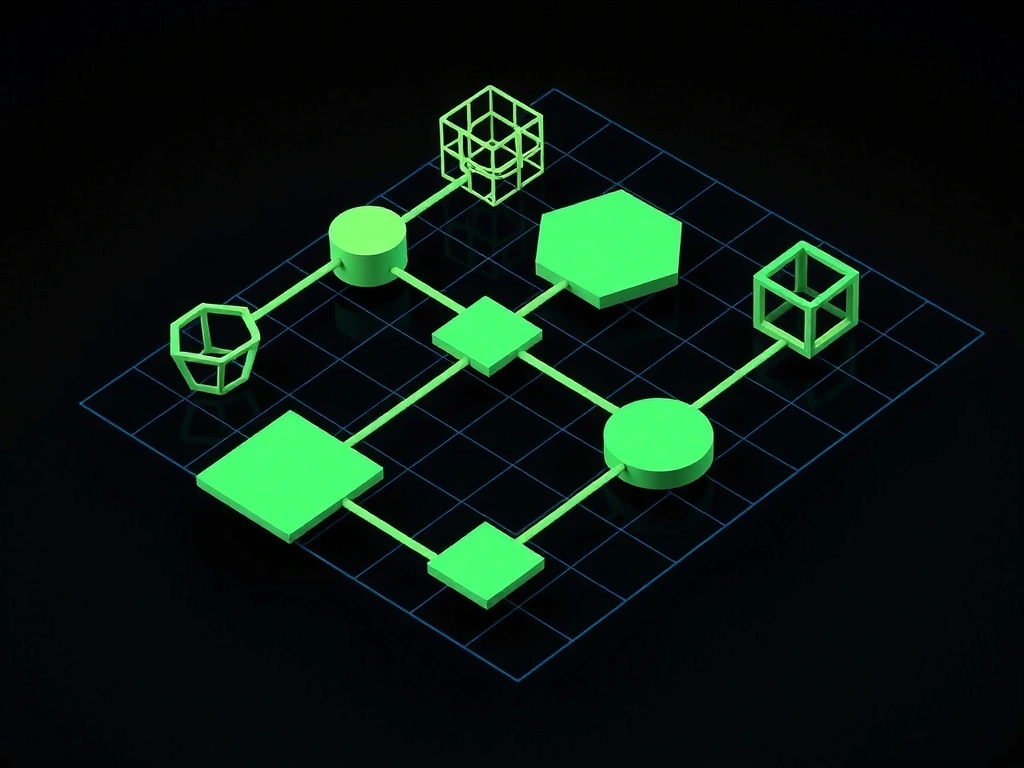
FIG. 1 The algorithmic mapping of player input to emotional feedback. Note the forced asymmetry in the primary loop.
Editorial Note
This schematic is a real artifact from our 'Gravity Run' project. We removed 3 proposed features at this stage because they disrupted the core loop's rhythm.
Constraints as a Creative Catalyst
Limitations aren't obstacles; they're the forge where innovation happens.
The Monochrome Mandate
Palette: 3 colors only. Result: Forced innovation in light/shadow storytelling.
Single-Button Depth
Input Limit: One tap. Result: Timing & rhythm became the primary mechanic.
Low-Spec First
Platform Constraint: Budget device first. Result: Universal core loop ensured.
Temporal Pressure
48-Hour Sprint: Proof-of-concept. Result: Killed feature creep before it started.
Constraint Taxonomy
⇄ The Trade-off Frame
-
1
Benefit: Increased creativity under pressure.
Cost: Higher initial failure rate.
Mitigation: Rapid iteration, not perfection. -
2
Benefit: Singular, polished core loop.
Cost: Limited scope.
Mitigation: Depth over breadth design. -
3
Benefit: Universal accessibility.
Cost: May feel basic to power users.
Mitigation: Layered complexity.
"We don't build games by adding features. We build them by removing every element that distracts from the emotional core. The result isn't just a game; it's a curated experience where every variable serves the player's journey."
— WinLino Design Principle #3
The Polish Paradox
Polish is not the final 10% of development. It's the first 90% of the player's perception. We distinguish between superficial sheen and meaningful, systemic refinement.
Our process defines polish in three layers. Systemic polish asks: does it work flawlessly under all conditions? Sensory polish asks: does it feel satisfying to touch, see, and hear? Surprise polish asks: does it delight unexpectedly without breaking the system?
"Our goal is not to make a game that looks expensive. It's to make a game that feels inevitable."
The trade-off we consciously make: we sacrifice some visual fidelity for a rock-solid 60fps. Because fluid motion is a non-negotiable sensory experience. A frame drop is more damaging than a less-detailed texture.
The 'Juice' Audit
For every player action, we ask three questions:
- Expected feedback: What's the logical response?
- Actual feedback: What's the programmed response?
- Ideal feedback: What would feel perfect?
Micro-Scenario: The Jump
Expected: Player presses jump button. Actual: Character moves up. Ideal: 3-frame wind-up animation + subtle screen shake + bass swoop + light trail. Result: A move that feels powerful, not just functional.
Systemic vs. Sensory
Pitfall Rail: Common Missteps
What we see in the wild—and how we avoid it.
Over-Animating UI
Every button wiggles, slides, pulses. Result: Player fatigue, not delight.
FIX: One meaningful animation per context.Silent Feedback
Visual feedback without audio cue. On mobile, 30% of players mute. Half the experience is missing.
FIX: Haptic pattern as audio stand-in.False Polish
Adding particle effects to a broken mechanic. The sparkle can't save a broken system.
FIX: System first, sparkle after.Feature as Polish
Adding 'more' instead of 'better.' An eighth control method is not polish; it's bloat.
FIX: Simplify to the essential.Ready to apply the lens?
See how our philosophy translates into a finished product in our deep-dive case study for "Gravity Run."